If you are a beginner to playing poker, then the rules might appear to be highly daunting… But it is not something you have to get worried about, as this guide explains it in its simplest form.
By the end, you’ll not only understand all the basics, but all the key rules that keep the wonderful game at TonyBet fair and exciting. Let’s dive in!
The Basics of Poker
Poker is a game that is played with a regular 52-card deck, and its goal is very simple. Win chips (or money) by carrying either the best hand/cards or by getting opponents to fold. Many of its variations exist, the most popular and the most widespread one being Texas Hold ’em.
How a Typical Match Starts
- Blinds: Before cards are dealt, two people post forced bets called the “small blind” and “big blind.” It makes sure that there’s always money in the pot.
- Dealing Cards: Each person gets two private cards (called “hole cards”).
- Betting Rounds: Participants take turns betting, checking, or folding. They decide this based on their hand strength.
The Five Community Cards
The dealer then reveals five community cards in steps:
- The Flop: 3 cards face-up.
- The Turn: 1 more card.
- The River: The final card.
One must combine their hole cards with these new ones to make the best hand.
Hand Rankings (Strongest to Weakest)

Knowing hand rankings is crucial.
- Royal Flush: A, K, Q, J, 10 (all the same suit).
- Straight Flush: Five consecutive cards of the same suit (e.g., 7-8-9-10-J of hearts).
- Four of a Kind: Four cards of the same rank (e.g., four Kings).
- Full House: Three of a kind + a pair (e.g., three Queens and two 5s).
- Flush: Five cards of the same suit (not in order).
- Straight: Five successive cards of mixed suits (e.g., 4-5-6-7-8).
- Three of a Kind: Three cards of the same rank.
- Two Pair: Two different pairs (e.g., two 8s and two 2s).
- One Pair: Two cards of the same rank.
- High Card: Simply, the highest card wins if no other options exist.
Key Rules
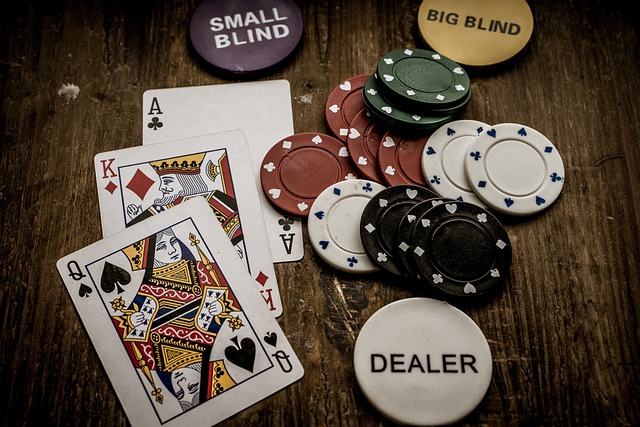
Poker can be best described as a game of calculated bets. One must decide whether to be aggressive or careful, and the choices are simple enough to mislead and yet deeply strategic:
- Check – A tactical pause. It allows you to defer betting while retaining control, but only if no one has opened the action.
- Call – Matching the current bet. It is a neutral move that keeps you in contention without escalating the pot.
- Raise – A bold declaration of confidence (or deception). It pressures opponents to either commit more chips or abandon their hands.
- Fold – The art of surrender, where you cut losses when the odds turn against you.
A skilled player learns the essence of balanced play and makes purposely identical bets of the same size to be unpredictable, and an example of such a strategy is a professional player who will always bet half the pot, whether they actually have a good hand or not, and will then gradually increase the pot size, drawing much less explicit attention to themselves.
This thought-out balance in their approach removes any exploitable tendencies and drives their opponents into the guessing game. The combination of deceit and mathematical accuracy means that even opponents who are closely paying attention still fail to clearly identify their moves as either weak or strong.